
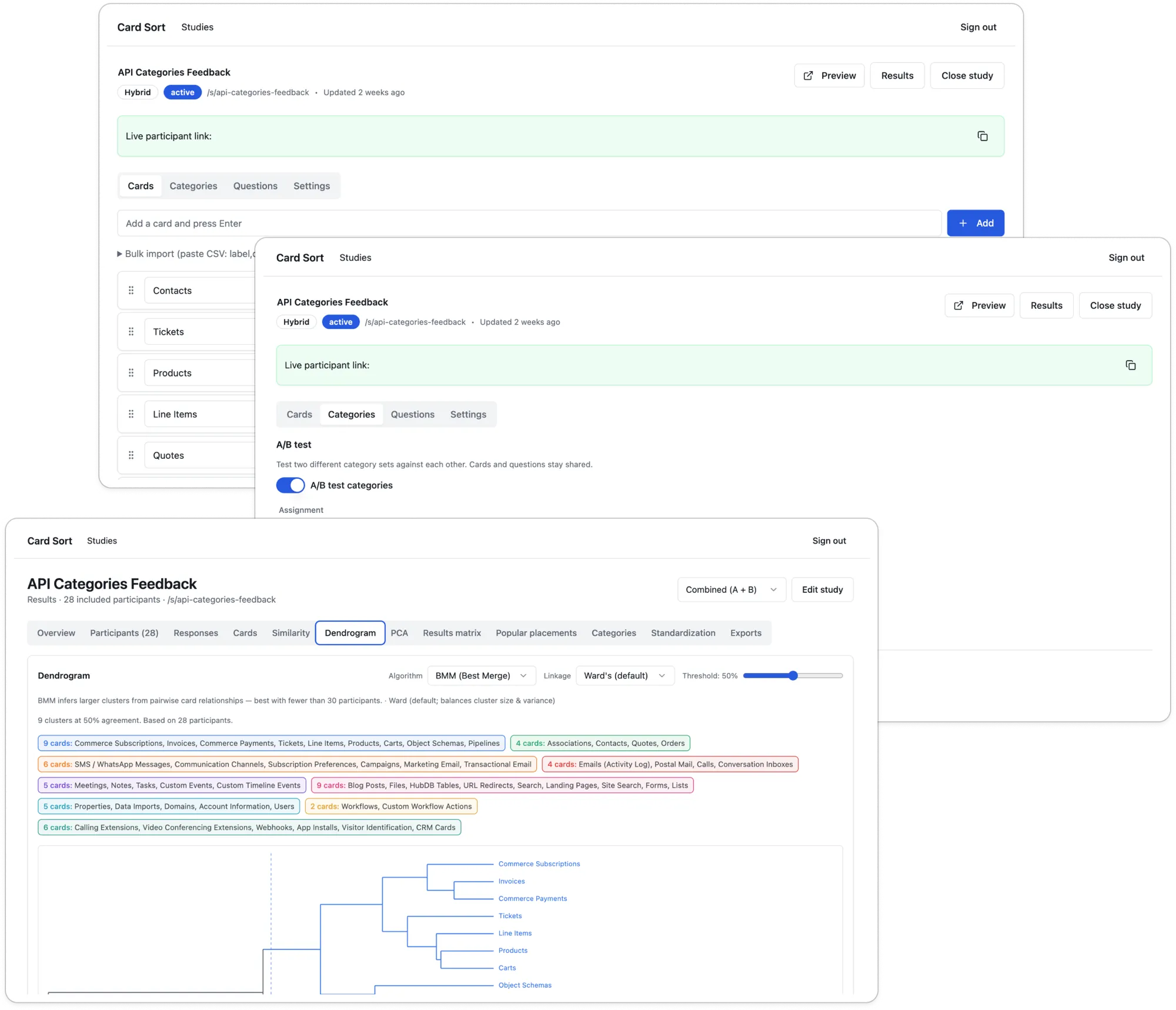
HubSpot has many public APIs. Should they be grouped by product, or by the primitives underneath: objects, events, communication, content? I built the tool above in about four weeks, and asked 28 developers.
What came out

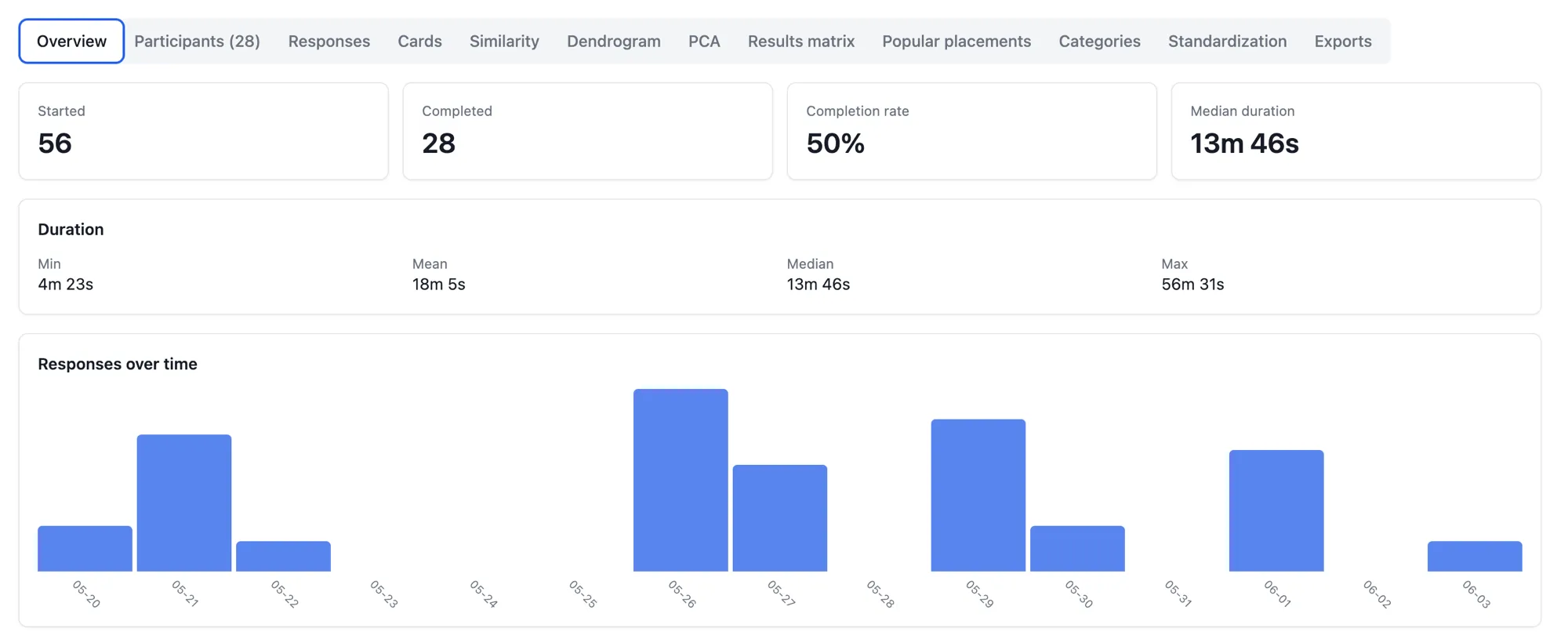
- 9 cardsCommerce Subscriptions, Invoices, Commerce Payments, Tickets, Line Items, Products, Carts, Object Schemas, Pipelines
- 4 cardsAssociations, Contacts, Quotes, Orders
- 6 cardsSMS / WhatsApp Messages, Communication Channels, Subscription Preferences, Campaigns, Marketing Email, Transactional Email
- 4 cardsEmails (Activity Log), Postal Mail, Calls, Conversation Inboxes
- 5 cardsMeetings, Notes, Tasks, Custom Events, Custom Timeline Events
- 9 cardsBlog Posts, Files, HubDB Tables, URL Redirects, Search, Landing Pages, Site Search, Forms, Lists
- 5 cardsProperties, Data Imports, Domains, Account Information, Users
- 2 cardsWorkflows, Custom Workflow Actions
- 6 cardsCalling Extensions, Video Conferencing Extensions, Webhooks, App Installs, Visitor Identification, CRM Cards
The primitive-aligned structure won.
How it was built

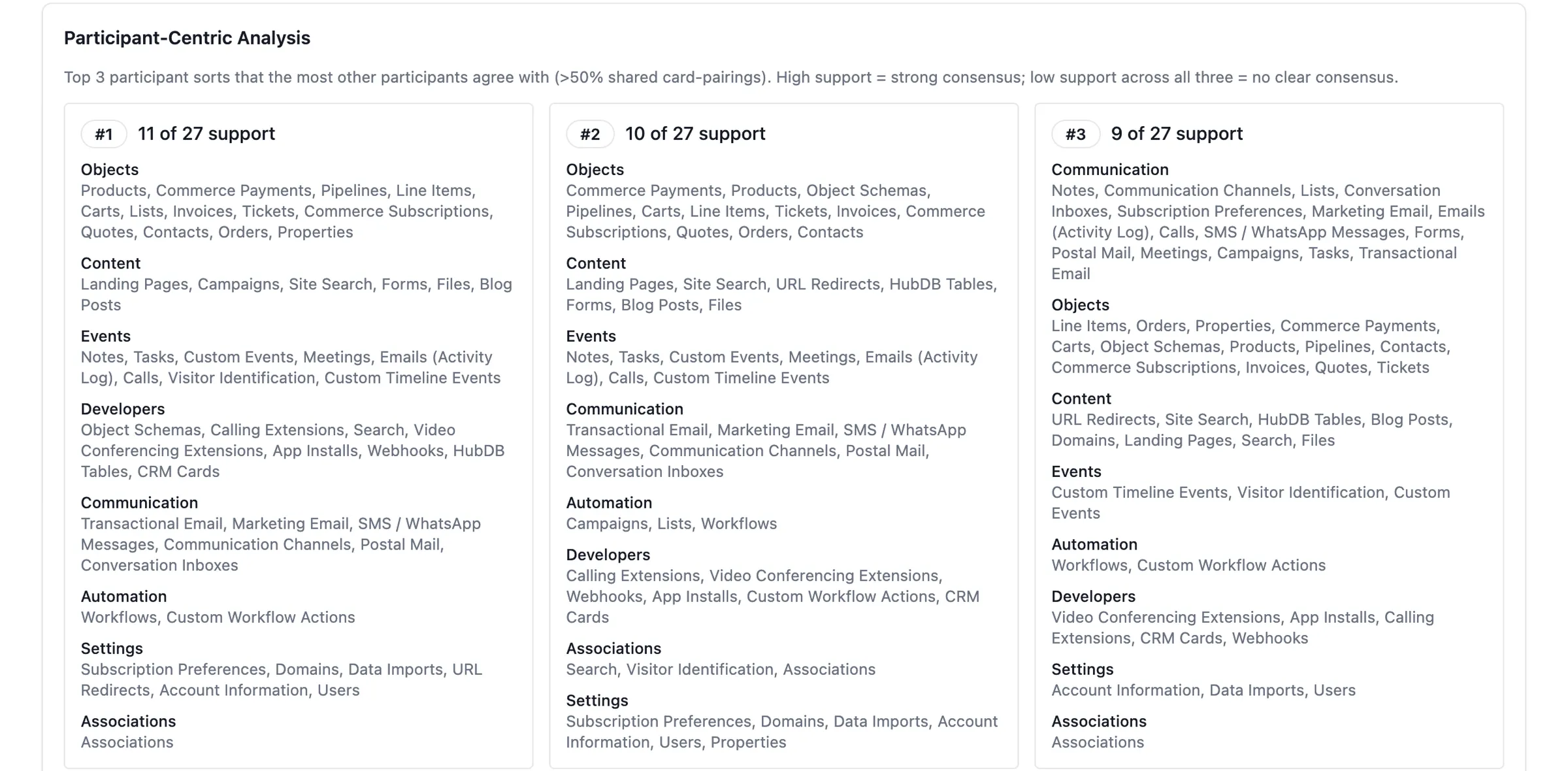
The first build had five serious incidents in four weeks. A routine change to save questions deleted every question response. A week later the same cause took the card placements of 15 of 28 participants.
I restored from a backup, remapped the rest by label with additive inserts, and re-ran the analysis. I also caught a count mismatch (12 participants against 28 responses) before the team accepted the results.
My rules for agents come from this: safe defaults in the schema, additive writes, a separate verifier, and no destructive action without a person saying yes. Later I rebuilt the platform with Claude Code.
AGENTS.md
Semi-autonomous. Reversible two-way-door actions (local edits, memory
consolidation, branch commits) run unattended. One-way doors (external
posts, pushes to shared repos, deletes, hook or permission changes) are
gated: park them in ## Pending review, never do them unattended.