Work
Featured case studies come first, then shorter pieces, then earlier work from 2016 to 2025.
Featured work
Agent operating system
How I run design work with agents, and how I keep them honest
Self-checking agent jobs, verifier agents with structural rubrics, and rules for which decisions wait for me.
Result: Over six months: 381 sessions, 651 subagents, and a little over 35,000 tool calls.
Release management for app developers
Usability sessions first, then a redesign built around versions
Four usability sessions first, then a redesign with versioned betas, a version-first view, and an optional beta path.
Result: Four sessions gave one critical and four high findings, and the redesign was built from them.
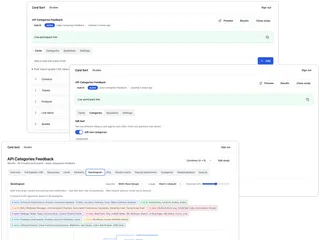
Custom card sort study tool
An API information-architecture study, and the AI-built tool that deleted its own data
A card sort with 28 developers picked a structure for HubSpot's APIs. The tool behind it lost data and I recovered it.
Result: Developers' groupings matched the primitive structure, not the product one: 5 of 9 clusters against 2.
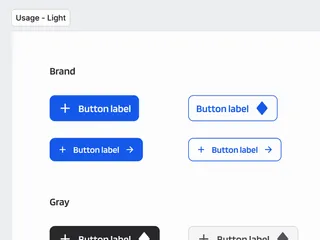
Intrepid design system
Primitives, variables, and about a dozen components in Figma
A small design system I built in a five-week bootcamp, with light and dark components made from variables.
More work
Natural language data filters
Four coded prototypes for building filters in plain language
Four versions of a coded prototype let people describe a filter and get a real, editable one back.
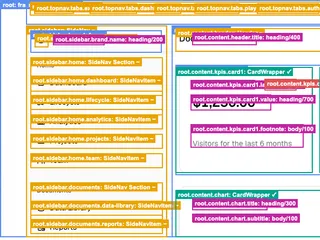
Figma spec engine and handoff study
I built a working tool, then shut it down for a better answer
A Figma spec engine that worked, a survey of 21 front-end engineers, and the decision to stop building.
Result: 21 front-end engineers answered: more than half still need Figma for exact values, even with a prototype in hand.
Design spec prototyping framework
Designing an AI product in production code
The main design artifact for an AI product is a coded prototype, and engineers build from it.
Earlier work
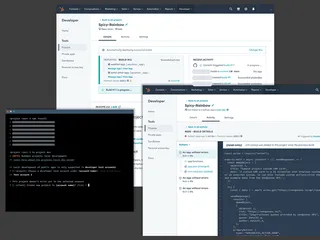
Unified developer platform
The vision, the beta, and the merge, 2021 to 2025
A 2021 vision, the Developer Projects beta, and the merge of two app models into one platform.
Result: Developers have created over 27,000 active projects.
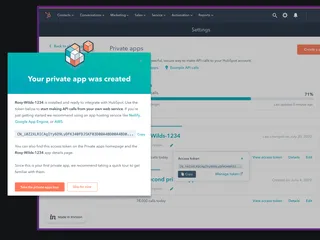
Private Apps and granular OAuth scopes
How I replaced account-wide API keys without making anyone reinstall.
A scoped-token model that replaced account-wide API keys, and a migration that moved more than ten thousand apps with no reinstall.
Result: More than ten thousand apps moved to least-privilege scopes with no reinstall.
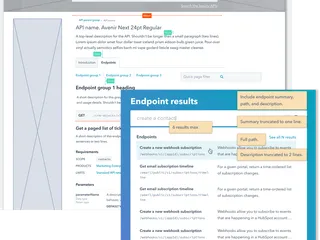
Developer docs and app onboarding
Developer docs IA, API design review, and app onboarding at HubSpot
Docs research and a new information architecture, an API design review, and onboarding that got more developers to a first API call.
Result: In an experiment, more developers made a first API call, in about half the time.
Developer platform design leadership
Hiring, onboarding, and a biweekly customer call that the whole product group watched together.
A year and a half as a player-coach for the developer platform design team, and a biweekly customer-call watch-along for the whole product group.
Result: The customer-call watch-along ran for about four and a half years.
Shopify integration and Ecommerce Bridge API
Seven store owners told me their store is their business, so the integration went into account settings.
Research with seven ecommerce businesses, a Shopify integration, and the Ecommerce Bridge API, announced at INBOUND in 2017.
Result: HubSpot announced the integration and the API at INBOUND in September 2017.
Motion principles and internal tool usability tests
- Role
- Product designer for internal developer tools, and co-author of the motion principles
- Team
- a UX researcher, platform infrastructure engineers, and the design system team
My first job at HubSpot was designing the internal tools our engineers used to build, deploy, and run code. Engineers used those tools every day, so with a UX researcher I started a monthly usability test: three engineers each month, their teammates watching live, and the top problems filed as tickets before the day was over.
At the same time I worked on HubSpot’s product design system. The design system needed motion rules, so I co-wrote three principles with the design system team (reinforce connection and control, respect people’s attention, be natural and nimble). I also wrote timing and easing guidance and motion specs for about a dozen components. I also built a template for auditing a UX pattern across the product and used it first on export, which worked a little differently in almost every app. The audit became a standard export pattern in the design system.
The science behind the motion principles turned into an article, “Visual Attention and Motion Design”, published in InVision’s Inside Design in March 2018. Read the Visual Attention and Motion Design article