Unified developer platform

The vision, the beta, and the merge, 2021 to 2025

2021 to 2025

  • Shipped
  • Full version is private
Role
Author of the 2021 vision, beta design lead, and designer on the four-person merge team
What it is
One projects-based platform to replace about 22 separate developer tools
Result
Developers have created over 27,000 active projects.
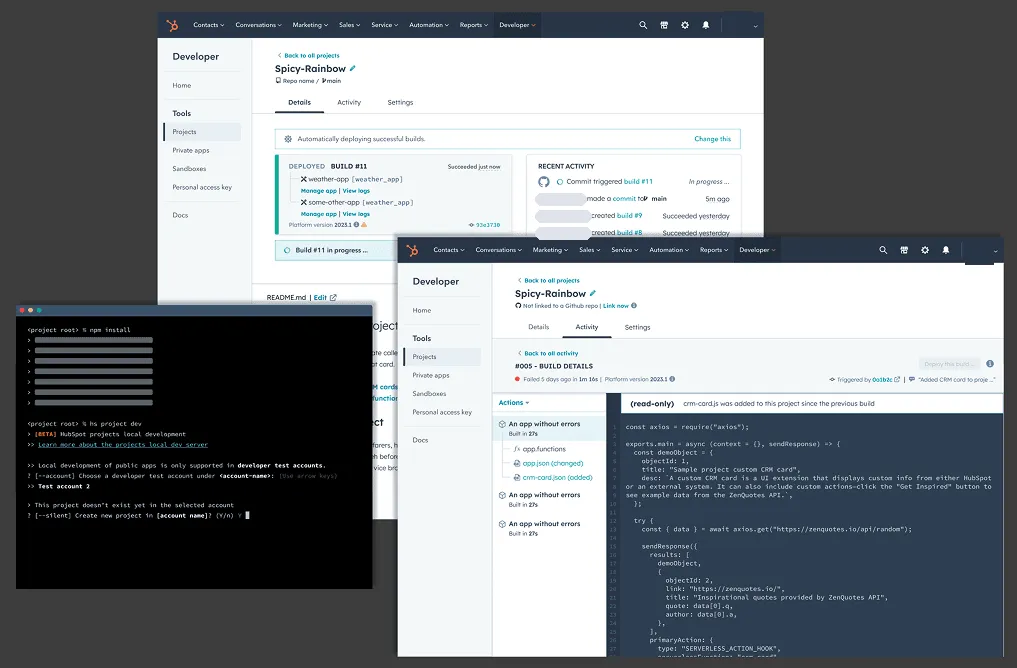
Three overlapping screens from Developer Projects. A project page lists builds and recent activity, a terminal runs the command line tool, and an activity view sits beside the source code of the project.
One project in the three places a developer sees it: the project page, the terminal, and the build activity beside the code. Names removed. View full size: Three overlapping screens from Developer Projects

In 2021, a developer building on HubSpot met about 22 separate tools. I wrote the vision that proposed one home: a projects-based build model and a CLI as the main toolbox.

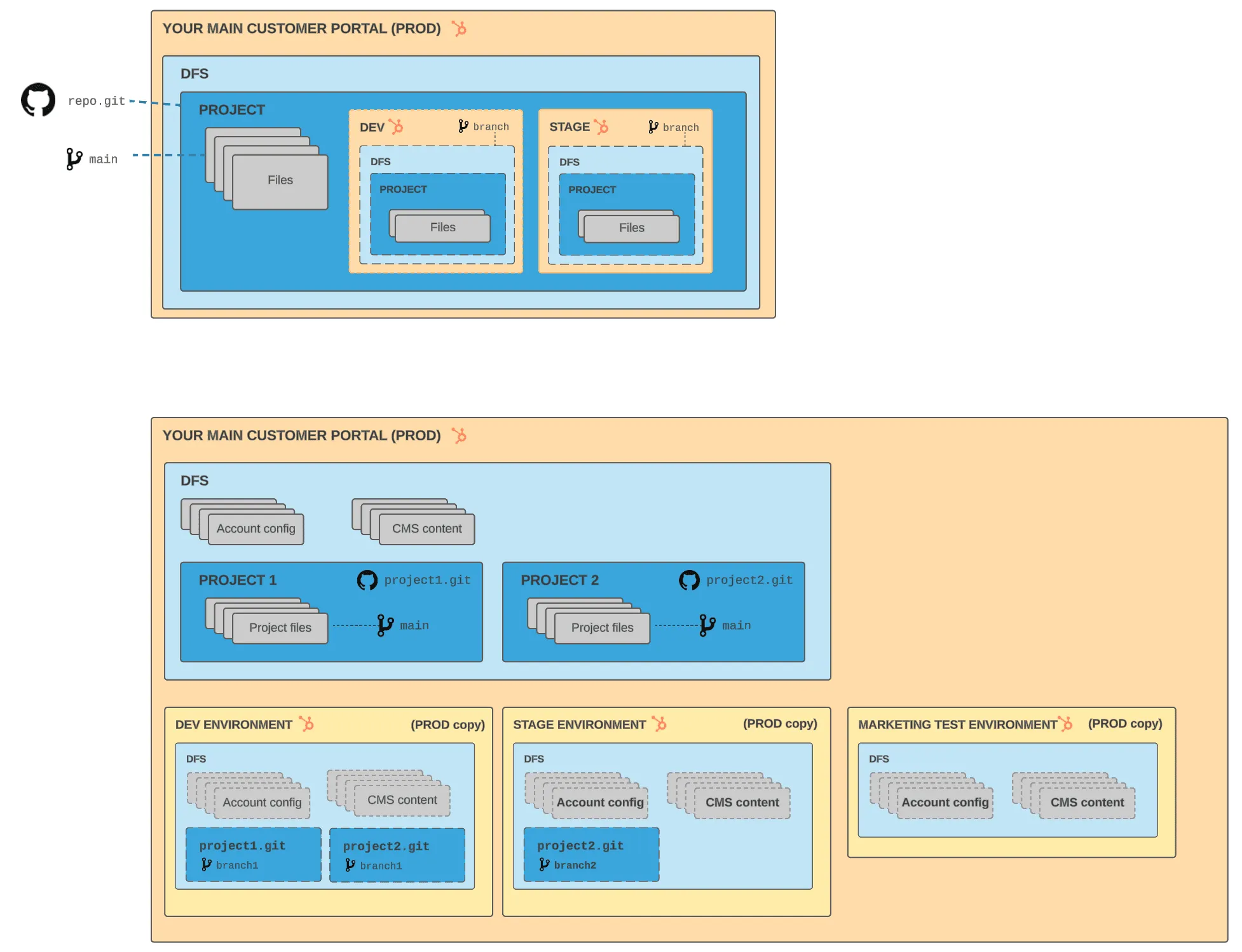
Two diagrams of the projects model. In the first, a customer account holds one project with development and stage branches. In the second, the account holds two projects, and separate development, stage, and test environments each hold their own copy.
Two early models of where a project, its files, and its environments live inside an account. Files are the backbone in both. View full size: Two diagrams of the projects model
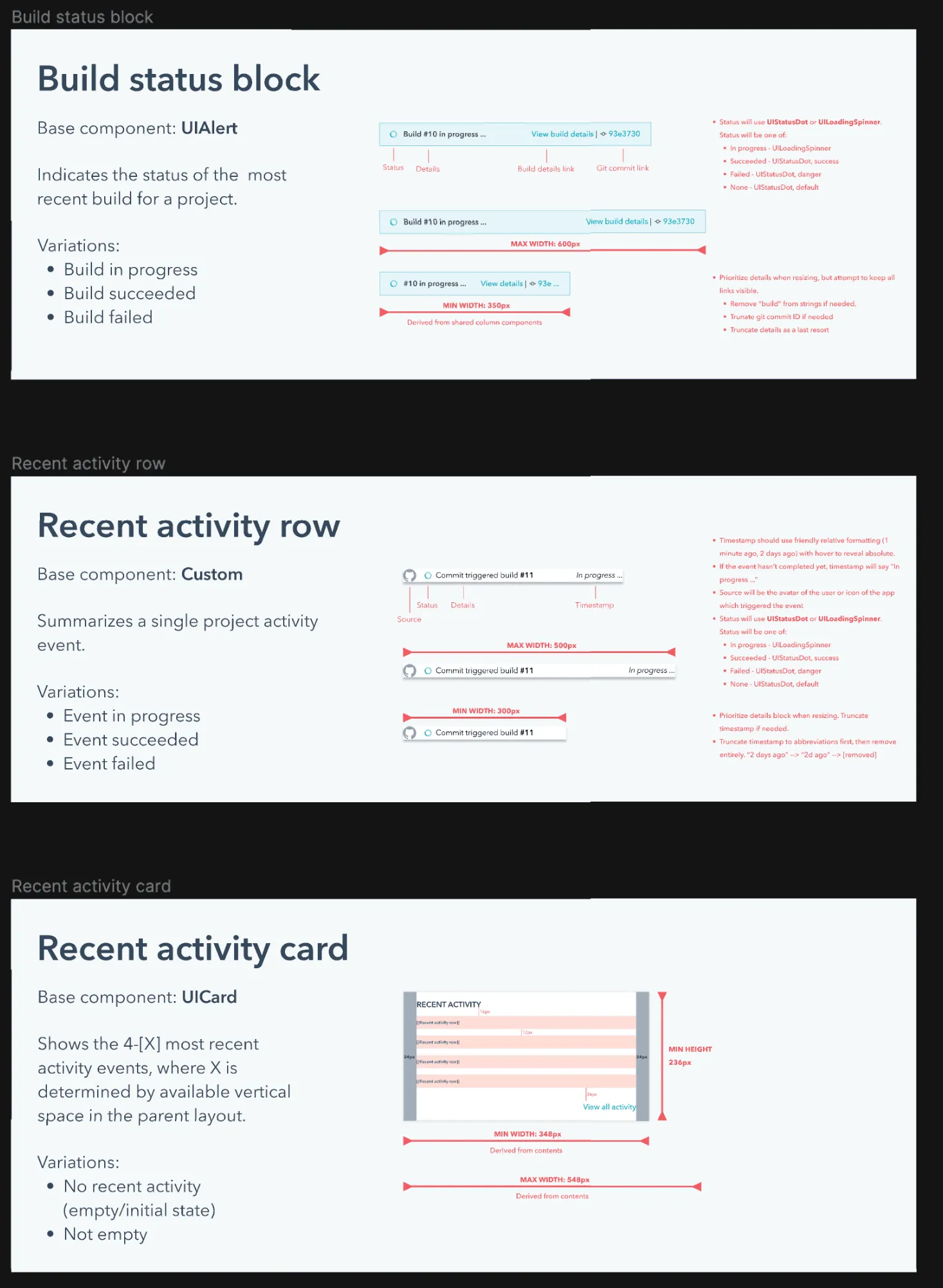
Three component specifications. A build status block, a recent activity row, and a recent activity card. Each names its base component, says what it shows, lists its variations, and marks its sizes in red.
Component specs for the project page. Each one names its base component in the design system, its variations, and its size limits. View full size: Three component specifications
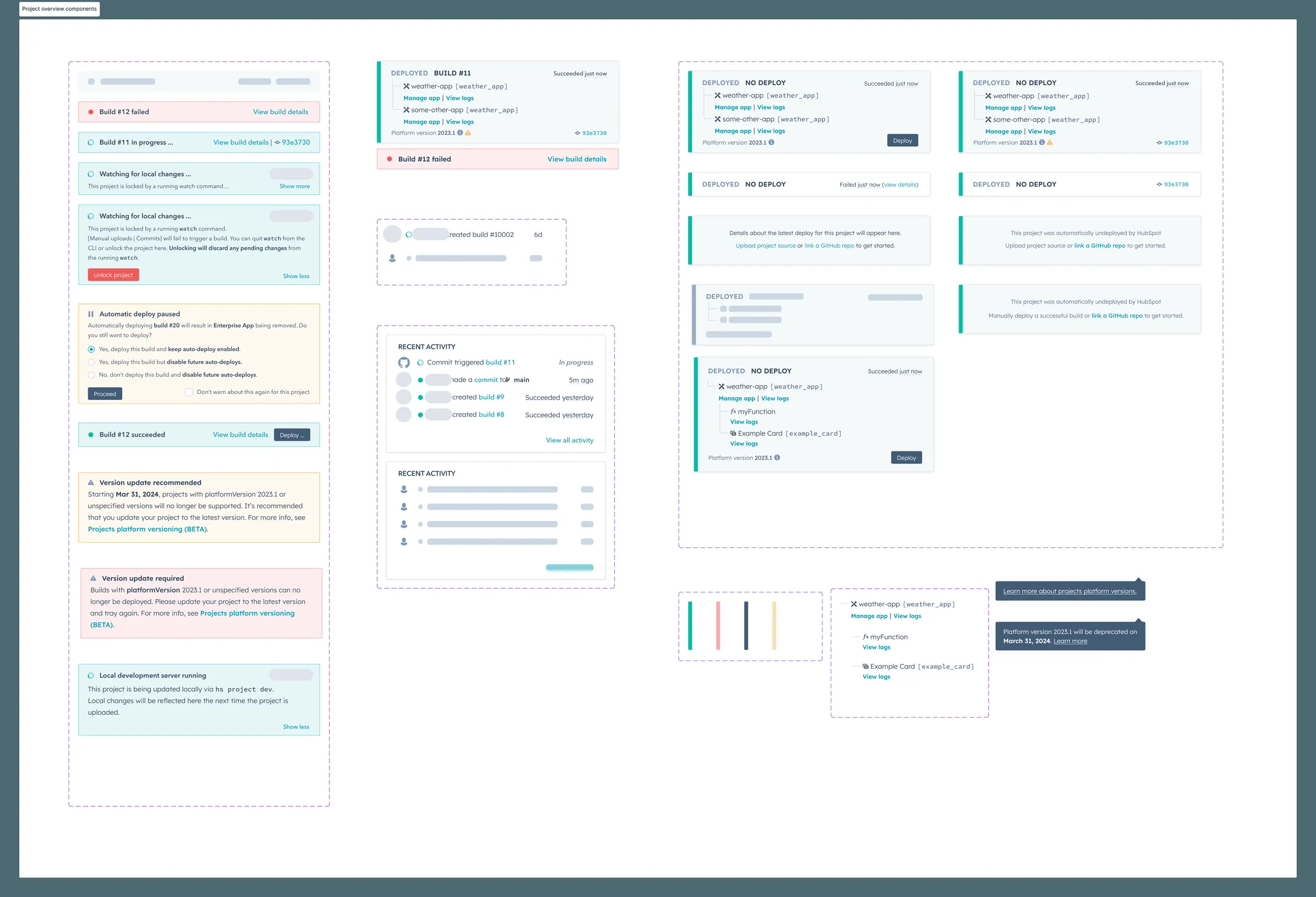
A Figma canvas with the states of the project page components. Columns of build status blocks, activity rows, and activity cards show in progress, succeeded, and failed states.
The same components in every state. The failed state gets its own red row and a link to the build details, as the succeeded state does. Names removed. View full size: A Figma canvas with the states of the project page components

The beta

I set our CLI guidelines and ran the alpha with about 20 companies. The CRM development tools reached public beta in September 2022.

Developers have created over 27,000 active projects. The apps built on them are installed on over 34,000 HubSpot customer accounts, and they correspond to nearly $50 million in impacted MRR.

The merge

In 2024 I designed the move of marketplace apps onto projects. On a four-person core team, I then helped merge the app models: every app built on projects, and “private” and “public” as two ways to distribute the same app. It launched as HubSpot Developer Platform 2025.2 at INBOUND 2025.

How it was built

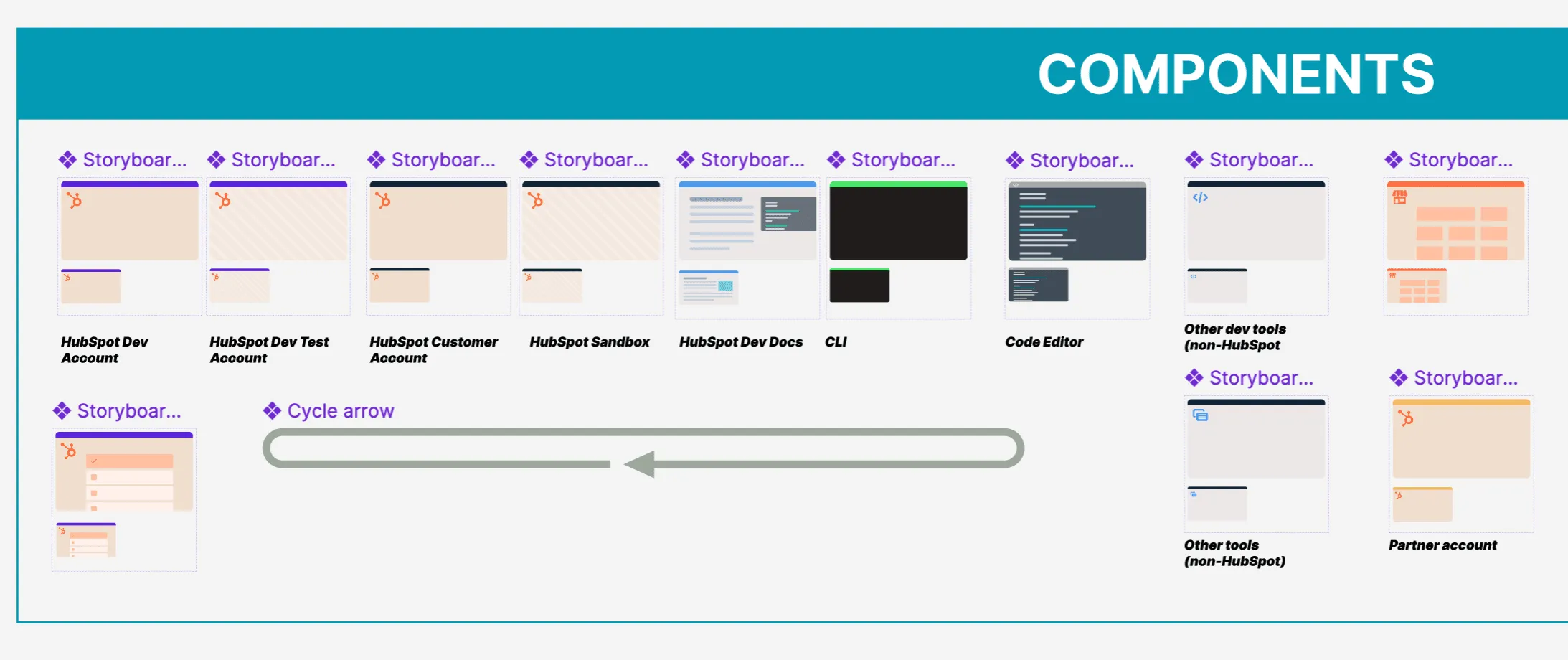
A Figma page named Components. It holds small storyboard pieces for each place a developer works, such as accounts, the command line tool, a code editor, and other developer tools, plus a cycle arrow.
The parts I built the storyboards from. Each one stands for a place a developer works. View full size: A Figma page named Components
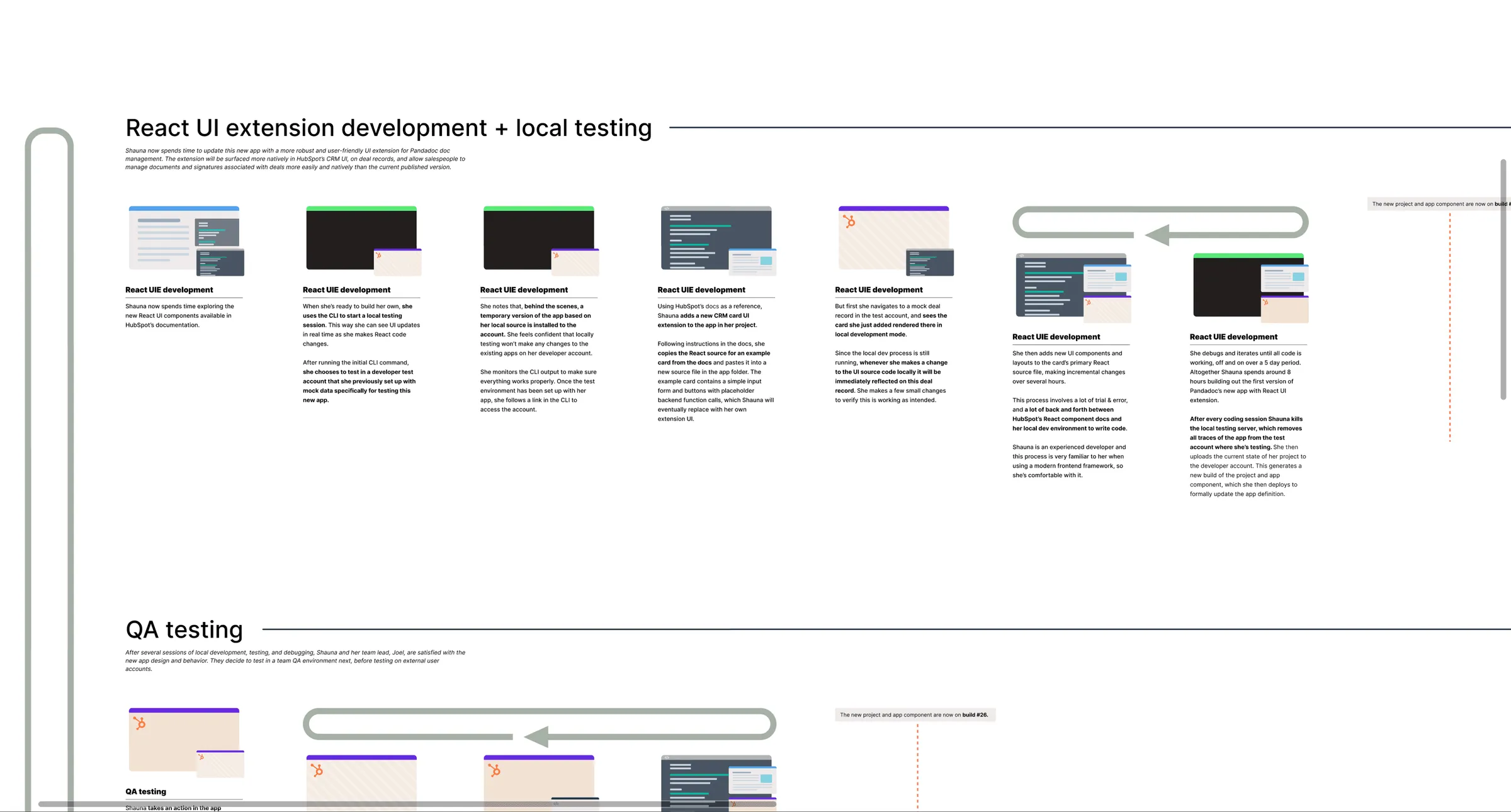
A Figma canvas with two storyboards. One row of frames is named React UI extension development and local testing, and a second row is named QA testing. Each frame has a small screen and a note under it.
Each frame pairs a small screen with a note on what the developer does, and a loop arrow marks the steps that repeat. The sheet runs from local development to QA testing. View full size: A Figma canvas with two storyboards

The full version, with the numbers, is on a private page. Ask me for access.